

What "Silver Spoons" Erases
The White House called young Americans lazy and coddled. Here's what young Americans — Trump voters and Democrats alike — actually said.
The Backdrop
The oldest trick in American politics is to turn economic pain into a character flaw.
Last week on Fox News, Jesse Watters set it up: “Some of these kids have never had real jobs and are complaining things are expensive. Things are expensive when you don’t have a real job.” Then Karoline Leavitt took the swing. Young Americans worried about affordability, she said, “have been raised with just silver spoons in their mouths, just getting everything handed to them.” Their fear about money, she later argued, came down to “laziness” and “liberal indoctrination.”
But this reflex is bigger than one White House comment. From the right, Dave Portnoy has called Gen Z workers lazy and entitled. From the cultural left and center-left, figures like Whoopi Goldberg and Jodie Foster have offered their own versions of the same critique: young people want too much, work too little, and need to toughen up.
Different messengers. Same move.
And that move matters because it does more than insult a generation. It erases them. It turns hunger into entitlement, exhaustion into laziness, anxiety into ideology, and a broken economic bargain into a personal weakness. It makes the actual lives of young Americans disappear just long enough for older and more powerful people to feel right.
So let’s put those lives back in the frame.
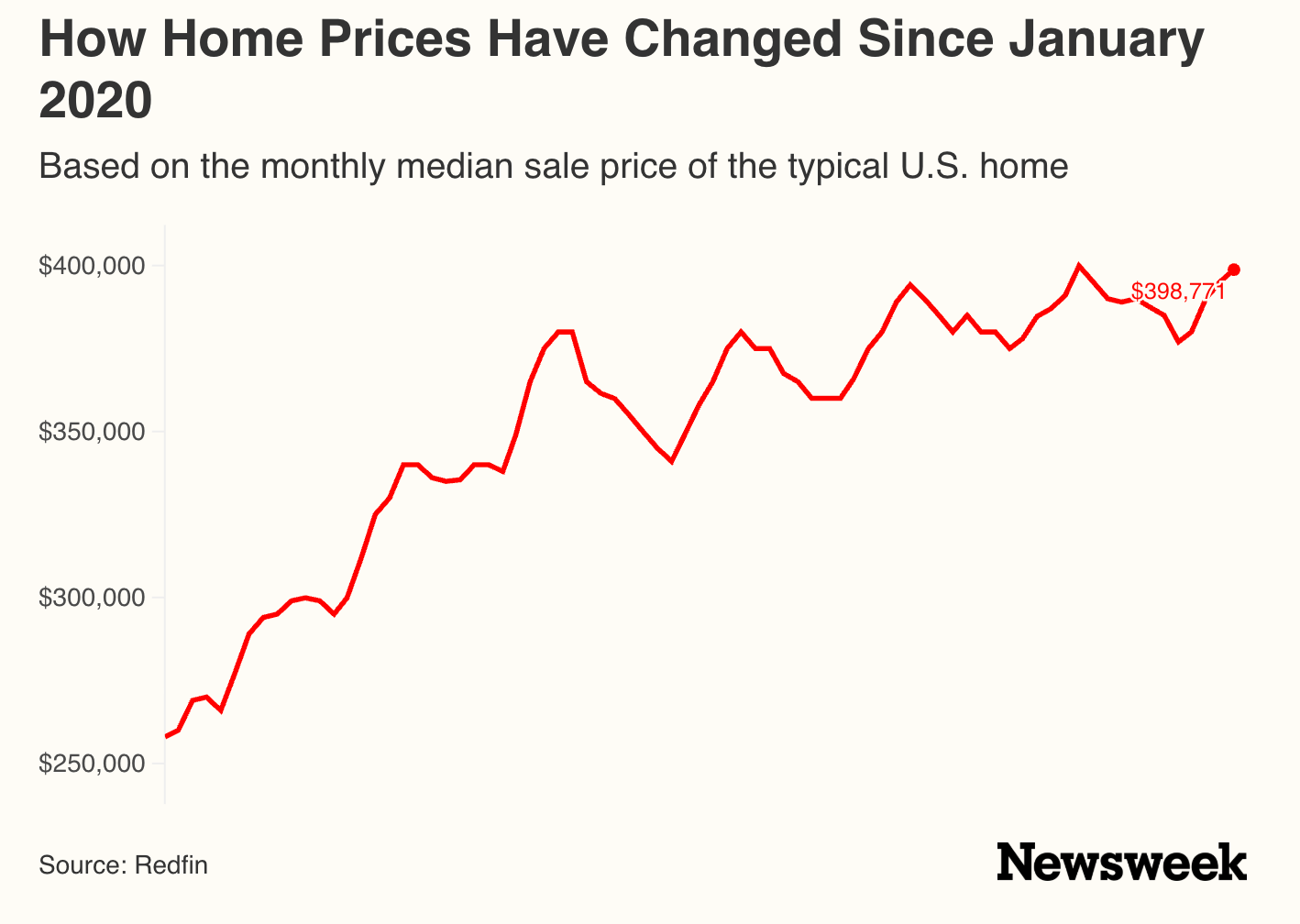
Set those lines beside what young Americans actually said this year, and you can watch, one finding at a time, everything comments like these are built to erase.
My Takeaways
#1: It erases the hunger
Start with the most literal thing “silver spoons” denies: some of these young people are not eating.
“I mean, honestly, all I can think about is how many people are hungry and how many people are homeless... I personally struggle to put food on my table. And there’s a lot of people who are homeless and we have more than enough homes.”
- Irene, 29-year-old White woman in Maryland
Twenty-nine and rationing her own meals — and still, the thing that eats at her is how many others are in the same place while the houses stand empty. That’s not the inner life of someone handed everything. The dread goes sharper in a young woman in Ohio, who spilled her whole unraveling in one breath:
“I don’t think I have a real life or future... It is full of uncertainty and disappointment and sheer terror because I cannot afford to eat three meals a day every day. I cannot afford to pay my sky-high bills. I cannot afford the sham of insurance that I do not use because I can’t pay the co-pays... people are working for it so hard that they’re dying before they can even pay their bills.”
- Lily, 24-year-old White woman in Ohio
Working so hard they’re dying before they can even pay their bills. A silver spoon has never once been this hungry. To keep the phrase, you have to pretend the sentence was never said.
#2: It erases the hours
For the ones who are working, “laziness” erases both the size of the effort and the cruelty of the reward.
“I was raised and taught that not to be lazy and to make your own way and don’t rely on social support systems. And now as I’m grown, I still have the motivation of working hard. But even with that, I still can’t make it... in reality we’re working 40 plus hours a week. Most of us have side jobs, double jobs to try and just be able to pay the bills.”
- Allie, 23-year-old White woman in Nevada
She was raised on the very ethic now being thrown at her, and she still can’t make rent. A young woman in Ohio put the exchange rate on all that labor:
“You’re working like a slave, but you don’t have any money to pay off your debt... 30 to 40 hours a week and still have to work that next week to get like a $200, maybe even $300 paycheck.
- Alina, 25-year-old American Indian Hispanic woman in Ohio, leans Democrat
Forty hours for two or three hundred dollars, then up before dawn to do it again. There is no couch anywhere in that life — only a person being worn down and told the wear is her own doing.
#3: It erases that the work ethic never changed — the math did
“Things are expensive when you don’t have a real job,” Watters said. But these are people with jobs, telling you the ground moved under them.
“I don’t think it’s that we are irresponsible. I think that it’s the cost of living is just astronomically higher than it was when the older generation was young.”
- Kennedy, 27-year-old White woman in Utah
She’s calmly diagramming the misread: not reckless kids, a shifted baseline. A young man in Ohio put the price tag on that shift:
“You could have bought a house on a single job, but today in order to get a house, you have to have worked two jobs and have a side hustle just to possibly be able to afford a down payment... Today’s time, $20 an hour doesn’t even cut it anymore.”
- 29-year-old White man in Ohio
Two jobs and a side hustle aimed at a down payment is the behavior of someone working harder than his parents had to — not less. The “real job” line erases the arithmetic so the effort can take the blame.
#4: It erases that this crosses every line — “liberal” doesn’t hold
She blamed “the liberal indoctrination.” But the exact same sentence is coming from inside her own coalition.
“Money is tight and hard and I’m barely getting by.”
- Tia Wheeler, 28-year-old White woman in Indiana, supports Trump
No spin, no ideology — a Trump supporter reporting that the numbers don’t add up at her own table. Another young man who voted the same way was angrier:
“A lot of people can’t even afford essential food through the week. A lot of people are living paycheck to paycheck... while we as Americans struggle and work our asses off for no reason.”
- Bryson, 25-year-old White man in South Carolina, voted for Trump
“Work our asses off for no reason” — a voter, not an opponent, and the direct opposite of lazy. A self-described conservative described the treadmill with no politics attached at all:
“You are a slave to money because you’re not financially free. So you have to constantly and constantly work and work and work, but you still feel broke.”
- A.D., 23-year-old White man in Illinois, leans conservative
And a young Democrat in Massachusetts, from the far opposite corner, landed on the identical bruise:
“It’s a struggle. I can barely afford anything... I don’t care about content. I just want a better economy.”
- Ava, White woman in her early 20s in Massachusetts, leans Democrat
Trump voter, conservative, Democrat — nothing in common except I’m working and it still isn’t enough. The word “liberal” simply falls off the theory.
#5: It erases where the exhaustion is heading
This is the cost that outlives the news cycle. Meet this much struggle with a shrug about character, and people don’t fight back — they go quiet, and then they go.
“It’s a very hard time for us. We’re all struggling in our own ways and people are feeling afraid to speak up.”
- Hannah, 23-year-old White Hispanic woman in Florida, leans Democrat
“Afraid to speak up” is the last stop before people stop speaking at all. One young woman had already made the trip:
“Most people in my age group feel completely helpless... We’re just going to have to cope.” - - Barry, 23-year-old White woman in Florida
“We’re just going to have to cope” isn’t anger you can channel. It’s a door closing — a generation deciding no amount of effort will be noticed or rewarded. And “laziness and the liberal indoctrination,” delivered from the highest podium in the country, is exactly the proof they were waiting for.
Bottom line
Strip away everything “silver spoons” and “laziness” are built to erase — the empty plates, the $300 checks for forty-hour weeks, the Trump voter and the Democrat saying the same exhausted sentence, the mother stuck without daycare, the terror over three meals a day — and the theory has nothing left holding it up. It was never a description of these young people. It was a decision not to look at them, right down to the suggestion to “send them to Cuba, send them to Iran.” But you can’t ship out a feeling this widespread, and you can’t shame the exhausted into hope. A generation already whispering “we’re just going to have to cope” heard, from the very top, that no one is coming — and quietly agreed. The only thing that reverses that is proof they were wrong to give up. So far, they’re still waiting for it.
About the interviews. These voices come from our nightly conversations with young Americans through CrowdVox AI, an AI-enabled research platform built to listen at scale while preserving the depth of open-ended interviews. Each excerpt reflects what Gen Z participants told us, in their own words, about work, money, housing, health care, family, politics, and the future they are trying to build.
As a 79-year old Baby Boomer still working full time to make ends meet, I have a lot of empathy and understanding for young people today who are struggling to get by. I have a lot of advantages in my life, but am living with a divorced niece and her three children, and I see how hard it is to make ends meet. It is indeed, "rich" coming from Trump and his toadies to call young people lazy and entitled. If my thirty-something niece and her children didn't have me, despite her going to work every day, she'd be among those like millions of other young people who have been forgotten and ignored by this administration. The story is as old as the hills--the rich get richer and the poor get poorer.
As one of the junior editors at St. Martins put it brilliantly, "Everything is made of money."
And what this piece made me realize is that the middle class kids whose immigrant forebears suffered and scraped to get by and get these kids into the middle class, now have to suffer and scrape like immigrants just to get by themselves. Why? Because our laws are built for billionaires and our economy treats everyone not a billionaire like a little lode to be mined and exhausted.